Kimi K3 vs. GPT-5.6 Sol & Claude Fable 5: The Trillion-Parameter Cost-Performance Revolution
A professional architectural and cost-performance comparison of Moonshot AI's 2.8T MoE Kimi K3 against GPT-5.6 Sol, Claude Fable 5, Grok 4.5, and Gemini 3.1 Pro. Discover why context caching makes open-weight agentic workflows viable.
The landscape of frontier foundation models is undergoing a massive shift. In mid-2026, the AI race has evolved beyond raw, absolute cognitive supremacy to focus on a new, critical metric: value and efficiency at the trillion-parameter scale.
On July 16, 2026, Moonshot AI launched Kimi K3, a Mixture-of-Experts (MoE) reasoning model boasting 2.8 trillion parameters and a 1-million-token context window. While proprietary giants like OpenAI and Anthropic push premium pricing on their flagships, Kimi K3 offers open-weight access that challenges the economics of production-grade AI applications.
Here is a professional, head-to-head architectural and pricing breakdown of Kimi K3 against the premier systems of 2026: GPT-5.6 Sol, Claude Fable 5, Claude Opus 4.8, Grok 4.5, and Gemini 3.1 Pro.
1. Architectural Innovation: Moonshot AI’s 2.8T MoE
Running a 2.8-trillion parameter model requires massive compute infrastructure. To make inference feasible and cost-effective, Moonshot AI engineered Kimi K3 with key optimizations:
- Sparse Mixture-of-Experts (MoE): Out of Kimi K3’s 896 total experts, it activates only 16 experts per token. This activation ratio enables Kimi K3 to process inputs with the speed and latency of a much smaller model while retaining the cognitive depth of a 2.8T giant.
- Kimi Delta Attention: Processing long contexts often causes memory bottlenecks in the Key-Value (KV) cache. Moonshot AI introduced a hybrid linear attention mechanism that drastically reduces the resource footprint, making its 1,048,576-token context window highly performant in real-world scenarios.
- Attention Residuals: A scaling method that prevents degradation in reasoning coherence over long-context retrieval, resolving a common issue where models “forget” information nested in the middle of long prompts.
2. Benchmark Comparisons: How Smart is Kimi K3?
Independent evaluations on the Artificial Analysis Index v4.1 place Kimi K3 in the global top 4 overall models, competing closely for the third position depending on the task. Here is how it stacks up in core capabilities:
Frontend Design & UI Generation
On the Frontend Code Arena (a human-preference leaderboard for client-side HTML/CSS/JS generation), Kimi K3 ranks #1. It outperforms closed-source giants like Claude Fable 5 and GPT-5.6 Sol in generating visually accurate, modern, and responsive interface code.
Software Engineering & Agentic Planning
When evaluating complex, multi-step workflows like resolving real bugs in large codebases (e.g., SWE-Marathon and Terminal-Bench 2.1), Kimi K3 is highly competitive:
- GPT-5.6 Sol remains the gold standard for long-horizon planning, logic, and self-correction.
- Kimi K3 performs on par with Claude Fable 5 and Gemini 3.1 Pro, demonstrating a deep capability to edit codebases, execute terminal-like actions, and trace errors autonomously, while outperforming previous legacy architectures.
3. Cost-Performance & API Pricing Breakdown
While cognitive capabilities are narrowing, pricing remains vastly different. The table below outlines API costs per one million tokens across the leading families as of July 2026:
API Pricing Comparison (per 1M tokens in USD)
| Model Family / Provider | Model | Input Cost (Standard) | Input Cost (Cache-Hit) | Output Cost | Context Window |
|---|---|---|---|---|---|
| Moonshot AI | Kimi K3 | $3.00 | $0.30 (90% off) | $15.00 | 1,048,576 |
| OpenAI | GPT-5.6 Sol | $5.00 | $0.50 (90% off) | $30.00 | 256,000 |
| Anthropic | Claude Fable 5 | $10.00 | $1.00 (90% off) | $50.00 | 200,000 |
| Anthropic | Claude Opus 4.8 | $15.00 | $1.50 (90% off) | $75.00 | 200,000 |
| xAI | Grok 4.5 | $2.00 | $0.20 (90% off) | $6.00 | 500,000 |
| Gemini 3.1 Pro | $2.00 | $0.20 (90% off) | $12.00 | 2,097,152 | |
| DeepSeek | DeepSeek V4 Flash | $0.14 | $0.014 (90% off) | $0.28 | 128,000 |
Data compiled in July 2026. Open-weight model execution costs will vary depending on self-hosting hardware (e.g., H100/B200 clusters).
4. Why Context Caching Changes Everything
For software engineering agents and Retrieval-Augmented Generation (RAG) pipelines, standard pricing is misleading. These workloads repeatedly read the same large context (e.g., a codebase, API documentation, or customer history).
Here is how Kimi K3’s 90% context caching discount shifts the economics:
- Codebase Querying: Querying an agent that reads a 500,000-token codebase 20 times per day would normally cost $30.00. With Kimi K3’s cache-hit rate, the input cost drops to $3.00, making continuous codebase indexing affordable.
- Long-Running Sessions: Multi-agent chains can build up massive system prompts. Utilizing cached inputs allows these agents to maintain state-awareness across hours of execution without exponentially scaling operational costs.
5. The labitcode Verdict: Which Model Should You Use?
- Choose Kimi K3 if: You are building software engineering agents, front-end generation tools, or long-context RAG pipelines where operational costs must be minimized without sacrificing reasoning quality.
- Choose GPT-5.6 Sol if: Your application depends on absolute peak logical reasoning, autonomous planning, and complex mathematical execution where price is a secondary concern.
- Choose Claude Fable 5 if: You need advanced creative prose, nuanced formatting, or deep multi-lingual reasoning where context size doesn’t exceed 200k tokens.
- Choose Grok 4.5 if: You need real-time data access and high throughput coding support at an aggressive flagship price.
- Choose Gemini 3.1 Pro if: You require a massive context window up to 2 million tokens and need native multimodal processing at a slightly lower base price.
Kimi K3 represents a milestone in the democratization of trillion-parameter models. By marrying a 2.8T MoE architecture with aggressive pricing and advanced context caching, Moonshot AI has made high-intelligence, open-weight reasoning accessible to developers worldwide.
Join the conversation
Have thoughts on this post? Share them on social media or reach out directly.
Related Posts
The AI Velocity Trap: Why Altman, Amodei, and Musk Tried to Hit the Brakes
In an unprecedented 72 hours, fierce rivals Sam Altman, Dario Amodei, Demis Hassabis, and Elon Musk agreed on one terrifying reality: AI is advancing too fast, recursive self-improvement is starting, and we have no brakes. Then geopolitical game theory slammed the door shut.
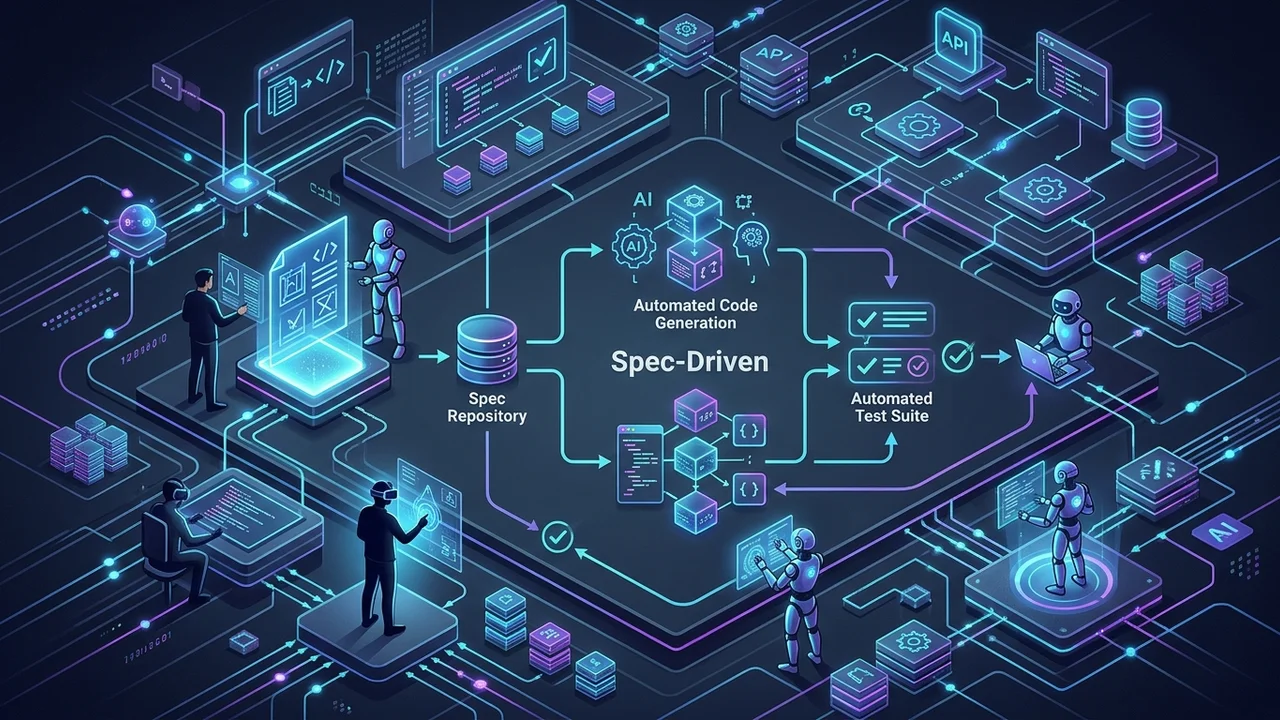
Spec-Driven Development in the Age of AI: OpenSpec vs. GitHub Spec Kit
Why 'vibe coding' fails at scale and how Spec-Driven Development (SDD) turns AI agents into reliable engineering partners. A deep technical comparison of OpenSpec and GitHub Spec Kit with real-world workflows, CLI commands, and architectural patterns.
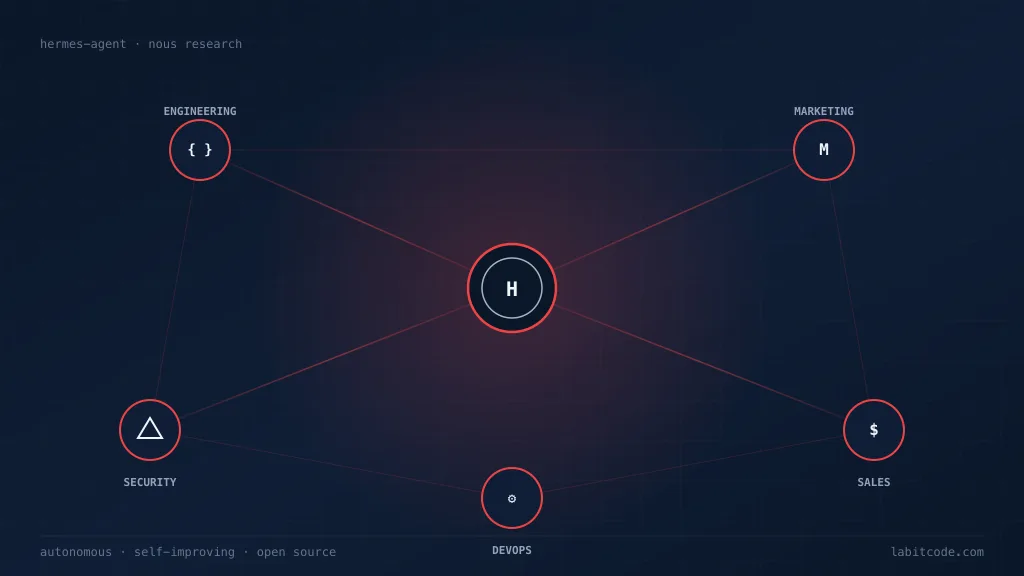
The Autonomous Startup: Building an AI Team with Hermes
A practical, code-complete guide to building an autonomous AI agent team with Hermes (Nous Research) — engineering, marketing, security, DevOps, and sales agents that run your startup on autopilot. Real configs, real skills, real cron jobs.